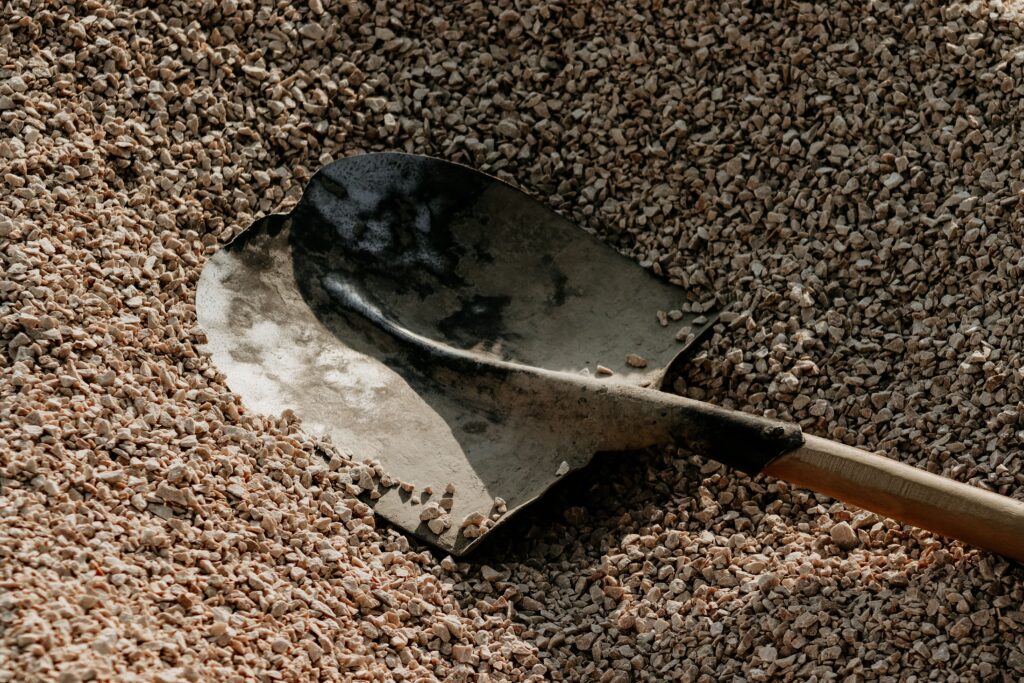
Landscape rock feels permanent — you put it down, and it’s just there. But anyone who’s lived through a few Arizona summers knows the truth: gravel thins, fades, and drifts over time. The desert is hard on rock, and eventually every yard needs a refresh. The good news is that topping off is simple, affordable, and dramatically cheaper than starting over.
So how often should you actually do it? Here’s what causes rock to break down, how to tell when it’s time, and how to stretch the years between refreshes — from the crew that replenishes more rock than anyone in the state.
Why landscape rock thins and fades in Arizona
Rock doesn’t vanish, but several desert forces work together to make it look tired and expose the ground beneath:
- Relentless UV. Arizona sun bleaches decorative rock over the years, dulling rich browns, reds, and golds into washed-out, chalky tones.
- Monsoon runoff. Heavy summer storms move gravel downhill, carve channels, and pile rock in low spots — leaving bare patches uphill.
- Foot and pet traffic. Walkways, gates, and play areas grind rock down and kick it aside, thinning the highest-use zones first.
- Settling into the soil. Without a weed barrier, rock slowly sinks into the dirt below, so the layer gets thinner even when none has physically left.
- Blow-away and cleanup loss. Leaf blowers, raking, and wind gradually carry off the finer material.
Put together, these mean the two-inch layer you started with quietly becomes a one-inch layer — and once soil starts peeking through, weeds and an unkempt look follow fast.
How often should you replenish?
There’s no single number, because a shaded backyard bed and a sun-blasted front slope age at completely different rates. Use these typical intervals as a starting point:
| Area | Typical refresh interval | Why |
|---|---|---|
| Full-sun front yards | Every 3–5 years | Maximum UV fade and wind exposure |
| Sloped or drainage areas | Every 2–4 years | Monsoon runoff moves rock downhill |
| High-traffic paths & gates | Every 2–4 years | Rock gets ground down and displaced |
| Shaded, undisturbed beds | Every 6–8 years | Little sun, traffic, or runoff |
| HOA & commercial common areas | On a set 2–4 year cycle | Consistent curb appeal across the whole property |
For HOAs and commercial properties, we usually recommend a planned rotation rather than waiting for complaints — it keeps the whole community looking uniform and makes the work easy to budget.
5 signs it’s time to refresh your rock
Forget the calendar for a second. Your yard will tell you when it’s ready. Walk the property and look for:
- Soil showing through. The clearest signal — if you can see dirt between the stones, the layer is too thin.
- Faded, washed-out color. Rock that used to be a warm brown or red now looks pale and gray.
- Bare or thin patches. Especially near walkways, downspouts, gates, and the bottoms of slopes.
- More weeds than usual. Thinning rock lets sunlight reach the soil, and weeds move right in.
- Uneven piles after storms. Gravel collecting in low spots while high spots go bare is a sign runoff is reshaping your yard.
Replenish vs. full replacement: which do you need?
Here’s the part homeowners are relieved to hear: most tired-looking yards don’t need a full tear-out. Replenishment — adding a fresh layer of matching rock over what’s already there — restores color, depth, and coverage at a fraction of the effort of a new install. It’s faster, cleaner, and easier on your budget.
A full replacement only makes sense when you’re changing the rock type or color entirely, when the existing material is badly contaminated with weeds or debris, or when there’s no weed barrier and you want to add one. For the vast majority of yards, a well-matched refresh is all it takes to look brand new.
How to make your rock last longer
A few smart moves at refresh time can add years before the next one:
- Top off to a full 2–3 inches. A proper depth hides soil, blocks weeds, and simply lasts longer.
- Add a quality weed barrier under new rock so it can’t sink into the soil — this alone dramatically slows thinning.
- Install or repair edging. Clean borders keep rock where it belongs instead of migrating into beds, turf, or the street.
- Regrade low spots and drainage paths so monsoon runoff stops carrying gravel downhill every summer.
- Match the material. Using the same rock type, size, and color blends the refresh seamlessly with what you already have.
Frequently asked questions
How often should landscape rock be replaced in Arizona?
Most Arizona yards need a rock refresh every 3 to 7 years, though full-sun, sloped, and high-traffic areas often need attention every 2 to 4 years. The best indicator is visual: once you can see soil through the rock, it’s time to top off.
Can I just add new rock on top of the old rock?
Yes — in most cases, adding a fresh layer of matching rock over the existing gravel (replenishment) is exactly the right approach. It restores depth and color without the cost and mess of a full removal.
Why does my landscape rock keep disappearing?
It’s usually a mix of UV fade, monsoon runoff moving it downhill, foot traffic, and rock settling into the soil where there’s no weed barrier. Adding a barrier and edging at refresh time slows all of that down.
What depth of rock should I have?
Aim for about 2 inches for most decorative rock — deep enough to cover the soil and suppress weeds. Areas with foot traffic or heavy weed pressure can go up to 3 inches.
Do you offer free estimates for rock replenishment?
Yes. Every property is different, so the best next step is a free on-site look. Reach out and we’ll take care of you.