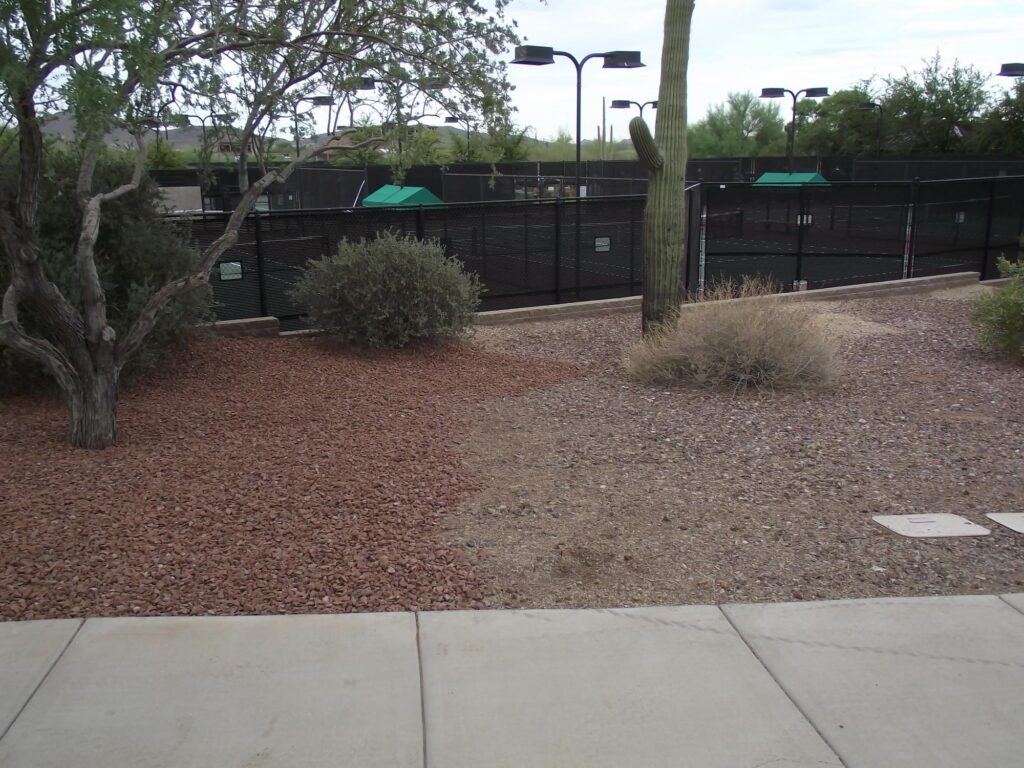
Pull up to most Arizona yards in October and you will spot them: little green sprigs poking up between the gravel, right where the rock looks thin. Weeds in landscape rock are the number one complaint we hear after a hot summer, and homeowners are usually surprised that the rock alone did not keep them out. It never does, not for good. But you can get very close, and fall is the right time to set it up before Arizona’s winter weeds germinate.
Here is why weeds keep finding a way in, and what actually stops them.
Why weeds grow in rock in the first place
Rock is cover, not a seal. Two things let weeds through it. Seeds blow in constantly and land on top, and over a few seasons dust and broken-down debris settle into the gaps and build a thin film of soil right on the surface of your rock. That film is all a desert weed needs. Add a gravel layer that has thinned enough to let sunlight reach the ground, and you have built a seedbed without meaning to.
The weeds we pull most across the Phoenix metro change with the calendar. Spurge and purslane run in the heat. London rocket, mustard, and little mallow take over once the nights cool off. Puncturevine, the goathead, lines driveways and walkways. And Bermuda grass creeps in from lawns and alleys. They spread differently, but every one of them exploits the same gap.
Start with depth, not chemicals
The single most effective weed control is also the least exciting: enough rock. A layer that has worn below about two inches lets light through to the soil, and light is what weed seeds wait for. Topping the bed back up to a full two to three inches blocks most of that light and smothers seedlings before they can establish.
- Two inches is the working minimum for decorative granite. Three inches holds up better along paths, gates, and anywhere the rock gets kicked around.
- Fill the thin spots first. Downspouts, the bottoms of slopes, and the edges of walkways go bare the fastest.
- Match the existing rock size and color so the refresh blends in instead of looking like a patch.
If your rock has drifted and thinned unevenly after the monsoon, a rock replenishment restores the depth across the whole yard in one pass, which does more for weed control than any spray.
Weed barrier: useful, not magic
Landscape fabric under the rock is worth installing. Just skip the marketing promises. A quality woven barrier stops weeds rooting up from the soil below and keeps your rock from sinking into the dirt, which slows thinning. What it cannot do is stop the weeds that sprout in the dust layer that collects on top of the rock, and after a few years every rock bed grows one. So fabric buys you years, not forever. We do not lay it on every job. On larger projects the added material and labor usually outweigh the benefit, so it is not something we roll in by default. If you do want it, we are happy to install it with a new rock installation or a refresh, and it earns its keep most under decomposed granite and other fine materials that pack down.
Solid plastic sheeting is a different story. Skip it.
Plastic traps water, which Arizona soil and plant roots hate, and it shreds into a mess within a season or two. Woven fabric breathes. In this climate that difference is the whole ballgame.
Time your pre-emergent for the desert, not the calendar
A pre-emergent herbicide stops seeds from sprouting, and in Arizona it runs on two clocks. Put one down in early fall, around October, to head off the winter weeds like London rocket and mustard that wake up as the nights cool. Put a second down in late winter, around February, before the summer weeds like spurge and goatheads get going. Miss those two windows and you are back to hand-pulling.
One catch worth knowing: pre-emergent only works before germination. Laying it over weeds you can already see does nothing for those. Clear what is up first, then treat the clean rock.
Mistakes that make weeds worse
- Salt, vinegar, or bleach on the gravel. They can knock down what is visible, but they poison the soil, run off into beds and storm drains during the monsoon, and do nothing about next season’s seeds.
- Weed-whacking instead of pulling. Cutting a goathead or spurge at the surface leaves the root and flings seed across the rock.
- Letting it ride a full year. The longer a weed sits, the deeper the root and the more seed it drops.
Pulling is easiest the day after a soak, when the ground is soft and the whole root slides out in one piece. Ten minutes after a rain beats an afternoon in April.
Edging holds the fix in place
One piece people skip is a border. Without edging, rock creeps into planting beds, turf, and the street, and the areas it leaves behind go thin, which is right where weeds move in. Steel, concrete, or paver edging keeps the gravel where you put it, so the two-inch depth you topped off to actually stays two inches. It is a small add at refresh time that pays off every season after.
Frequently asked questions
Does landscape fabric stop all weeds?
No. Fabric stops weeds rooting up from the soil below and keeps rock from sinking, but weeds still sprout in the dust and debris that collect on top of the rock over time. It slows the problem by years rather than ending it.
Will adding more rock really keep weeds down?
Yes, more than most people expect. Weed seeds need light to germinate, and a full two to three inch layer blocks it. Letting rock thin below two inches is the most common reason weeds come back.
When should I put down pre-emergent in Arizona?
Twice a year. Around October before winter weeds germinate, and around February before summer weeds start. Apply it to clean rock, since pre-emergent stops seeds, not weeds that are already growing.
If the weeds have taken over because the rock beneath them wore thin, a fresh, properly matched layer is the fix that lasts. We have replenished more rock than anyone in Arizona, and we will tell you honestly whether you need a top-off, a barrier, or a full reset. Request a free estimate and we will take a look. Or call us at (602) 905-7099.