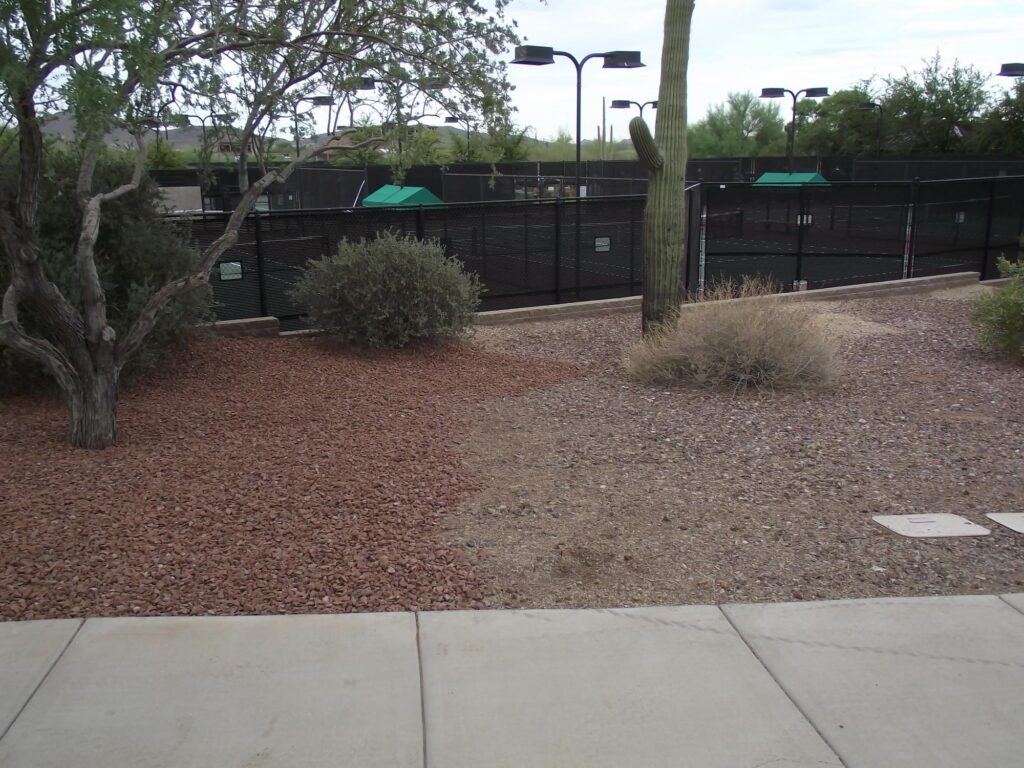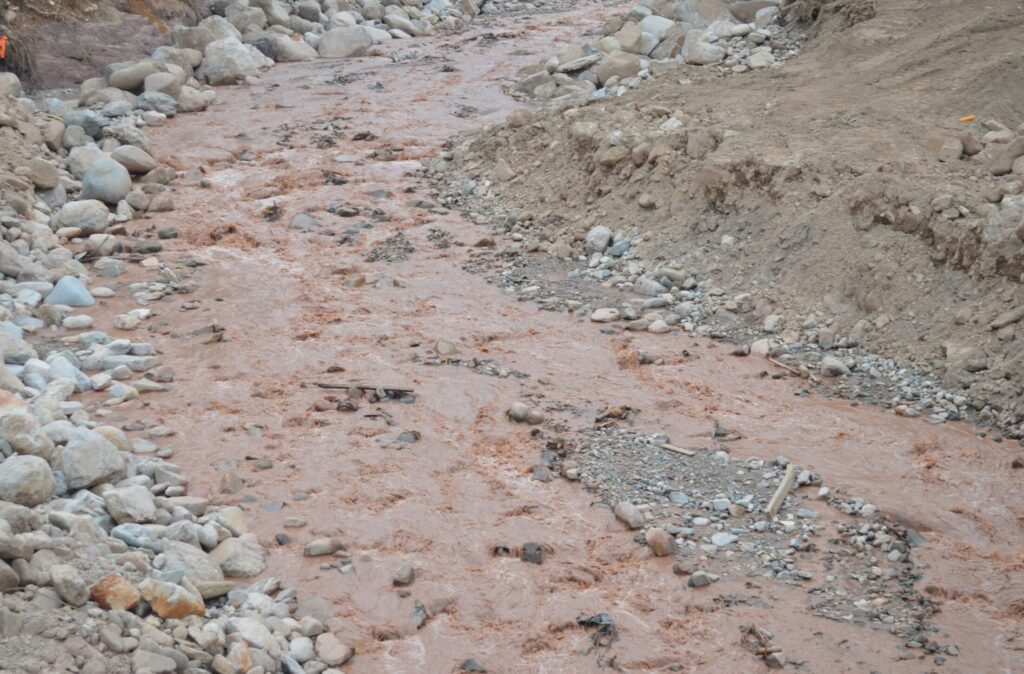
Arizona’s monsoon gives our desert a much-needed drink — and then hands landscapers a mess to clean up. When those late-summer storms drop an inch of rain in twenty minutes, the water has to go somewhere, and it takes your landscape rock with it. As monsoon season winds down through September, it’s the ideal time to assess the damage and get your yard, common areas, or commercial property back in shape before the busy fall season.
Here’s how monsoon storms move rock around, what a proper repair looks like, and how to keep it from washing out again next year.
What monsoon storms do to landscape rock
Fast, heavy runoff is the enemy of loose gravel. In a single strong storm you’ll often see:
- Washouts and ruts — channels carved through beds where water ran hardest, leaving bare soil exposed.
- Migration — rock carried downhill and dumped in low spots, against curbs, or across sidewalks and driveways.
- Piling and fanning — gravel spread out into the street, parking lots, or turf where it doesn’t belong.
- Exposed weed fabric — the barrier beneath torn or uncovered, which invites weeds and looks rough.
Beyond looks, washouts are a real problem: bare soil erodes faster with each following storm, and rock scattered into roadways and drains becomes a hazard and a maintenance headache. Left alone, a small washout only gets bigger.
Step one: clear and assess
A good repair starts by clearing rock off the surfaces it doesn’t belong on — sidewalks, driveways, streets, and drains — and pulling it back from where it piled up. This also reveals the real story: where the water entered, the path it took, and the low points where it pooled. That map of the flow is what tells us how to fix it so it holds next time.
Step two: regrade before you refill
This is the step most DIY fixes skip, and it’s the one that matters most. Simply dumping fresh gravel into a rut without correcting the grade just gives the next storm more material to wash away. Regrading re-establishes the slope so water sheets across the surface or channels to where you actually want it to go, instead of cutting a new trench through your beds.
Once the grade is right, we refill the scoured areas and top the surrounding beds back to full depth with matching material from our selection of landscape rock, so the repair blends in instead of standing out as a patch.
Step three: armor the high-flow areas
Some spots take a beating every single monsoon — the mouth of a wash, a downspout outlet, the bottom of a slope, a drainage swale between buildings. In those areas, standard decorative gravel will never stay put. The fix is to size the stone to the flow: larger, heavier rock and riprap that water can’t easily lift, set where it’s needed to break up the force of the runoff and protect the soil underneath.
For HOAs and commercial sites especially, getting these chronic problem areas armored once saves the same repair bill storm after storm. It’s a common request from the property managers we work with on commercial and municipal properties.
Why fall is the right time to do it
Waiting until spring means a full winter of that bare, eroding soil getting worse — and it means walking into the next monsoon with the same weak spots. Repairing in the fall closes out this storm season’s damage while the weather is comfortable for crews to work, and it sets you up clean for winter and the busy install months ahead. It’s also when HOA boards and property managers are planning next year’s grounds budgets, which makes it a natural time to address recurring washout areas for good.
Prevention: make next monsoon easier
You can’t stop the storms, but you can make your property shrug them off:
- Keep beds at full depth — a proper two-inch layer resists scouring better than a thin one.
- Fix the grade so water has a planned path, not an accidental one.
- Use the right stone size in high-flow zones instead of fighting physics with fine gravel.
- Add or refresh edging to hold rock where it belongs.
- Address small washouts early, before they become channels.
Frequently asked questions
Can I just sweep the rock back and call it done?
For minor scatter, sweeping helps — but if a storm carved a rut or exposed soil, the grade needs correcting first, or it’ll wash out again. Sweeping treats the symptom, not the cause.
What is riprap and do I need it?
Riprap is larger, heavier stone placed in high-flow areas to resist erosion. You need it where water concentrates and keeps moving your gravel — wash mouths, downspouts, and steep swales.
How soon after a storm should I repair a washout?
The sooner the better. Bare soil erodes more with every following storm, so addressing it before the next downpour keeps a small repair from turning into a big one.
Storm damage? Let’s get it sorted before fall.
If the monsoon left ruts, bare spots, or gravel where it shouldn’t be, we can regrade, refill, and armor the trouble areas so your property looks sharp and stays put. We handle washout repair for homes, HOAs, and businesses across our Arizona service area. Request a free estimate and we’ll take a look.